The Enduring Appeal of Mazda Rotary Engine Parts
There is something about the sound and feel of a Mazda rotary that stays with you. I remember the first time I heard an RX-7 pull away from a set of lights it had that rising, turbine-like note that no piston engine can quite replicate. For anyone who has owned one, the relationship is personal. You learn the quirks, you accept the oil consumption, and you come to understand why the Wankel engine divides opinion so sharply. But when something goes wrong, the hunt for genuine Mazda rotary engine parts can feel like a rite of passage.
That hunt is what this article is about. Not the theory of how a rotor spins inside a housing, but the practical reality of finding the right components to keep a 12A or 13B on the road. Whether you are restoring an early Eunos or chasing top-end power in a Renesis, the parts you choose matter. And the choices are not always straightforward.
Understanding the Core Components
At the heart of every rotary engine sits the rotor. It is the piece that does the work, compressing and expanding the air-fuel mixture as it turns inside the epitrochoid housing. The rotor itself is a precision casting, and over time the faces wear. The apex seal is the most critical wear item here. A failed apex seal can destroy a housing in seconds, turning a running engine into a core that needs machining or replacement. I have seen more than one beautiful RX-7 sidelined by a broken seal that was installed without checking the groove clearance.
The crankshaft in a rotary is also different from a piston engine. It is shorter, stiffer, and carries the rotor through its eccentric motion. If the crankshaft journals are scored, the whole engine may need a full rebuild. Many people overlook this part when buying a second-hand car, assuming that if it turns over it is fine. But a worn crankshaft will lead to oil pressure issues and premature bearing failure.
Oil injectors are another area where used parts can be a gamble. The injectors spray oil onto the rotor housing walls to lubricate the apex seals. On older 12A engines, these injectors are relatively simple. On the Renesis in the RX-8, they are more precise and more prone to clogging if the car has been run on poor quality oil. If you are sourcing Mazda rotary engine parts from a dismantled car, it is worth pulling the injectors and checking the spray pattern before fitting them.

The Challenge of Sourcing Used Parts
New old stock is drying up for many rotary models. Mazda itself stopped producing some components years ago, and the aftermarket can be hit or miss. That is where specialist wreckers like Just Rotaries in Melbourne come into the picture. They dismantle Mazdas that have reached the end of their life and catalogue the usable parts. For someone rebuilding an RX-7 or an RX-8, a good wrecker can be the difference between finding a clean intake manifold and spending weeks chasing a part that no longer exists.
I have bought used parts from several sources over the years. Some were excellent. Others were sold with surface rust that turned out to be pitting after a closer look. The key is to ask the right questions. How many kilometres were on the donor car? Was the engine running when it was pulled? Can you see the rotor housing in a photo? A reputable supplier will answer these questions honestly. Just Rotaries, for instance, has a reputation for being transparent about the condition of their stock, which matters when you are ordering from interstate.
Used parts also come with a trade-off: price versus risk. A second-hand turbocharger from a dismantled Mazda might cost a fraction of a new one, but it could have shaft play or cracked housings. The same goes for an exhaust manifold. You can save money, but you need to inspect or have the seller inspect the part thoroughly. If you are not comfortable doing that, sometimes it is better to spend more on a new or reconditioned component.
The 12A and 13B Differences
The 12A and 13B are the two most common rotary engine families in Mazda's history, and they are not interchangeable. The 12A was used in the early RX-7 and some Eunos models. It is smaller, lighter, and has a different bolt pattern on the intake manifold. The 13B appeared in later RX-7s, the RX-8, and many Mazda commercial vehicles. It has more displacement and a different rotor design.
When you are sourcing Mazda rotary engine parts, it is critical to know which series your engine belongs to. A 13B rotor will not work in a 12A housing, and the apex seals are different dimensions. I once watched a friend try to fit a 13B intercooler onto a 12A engine by drilling new mounting holes. It worked, but barely, and the alignment was off. He ended up buying the correct part from a wrecker and the car ran properly afterward. It was a lesson in patience.
The Renesis engine in the RX-8 is a further evolution. It has side intake and exhaust ports, which change the shape of the intake manifold and the exhaust manifold. Many standard 13B parts will not fit a Renesis without modification. If you are working on an RX-8, your best bet is to look for parts specifically tagged as Renesis or from a late-model donor car.

Practical Tips for the Home Builder
If you are planning a rebuild or a repair, here are a few things I have learned the hard way:
- Always measure the rotor housing wear. Use a set of callipers to check the depth of the chrome surface. If it is below spec, the housing is scrap.
- Replace the oil injectors if there is any doubt. They are cheap compared to a new rotor housing.
- Check the crankshaft end float. Too much play means the bearings are worn and the shaft may need machining.
- When buying used Mazda rotary engine parts, ask for photos of the actual item, not a stock image.
- Keep a log of where each part came from. If something fails, you will know which supplier to contact.
These steps are not complicated, but they save time and money. I have seen people skip the inspection and then wonder why their rebuilt engine lost compression after five thousand kilometres. Usually it was a worn apex seal or a housing that was already past its limit.
The Role of Aftermarket and Reconditioned Parts
There is a growing aftermarket for rotary parts, especially in Japan and Australia. Companies now produce new apex seals, rotor housings, and even complete rotor assemblies. The quality varies. Some aftermarket seals are made from ceramic composites that last longer than the original Mazda items. Others are cheap steel that wears quickly. If you are building a high-performance engine with a turbocharger and an intercooler, you may want to invest in better seals. For a standard restoration, genuine or known-brand aftermarket parts are usually safer.
Reconditioned parts are another option. A reconditioned crankshaft, for example, can be ground to a smaller size and fitted with oversized bearings. This is common when the original journals are damaged but the shaft is still structurally sound. A good machine shop can do this work, but it costs money. For many people, buying a used crankshaft from a low-kilometre donor car is the more economical route.
The same logic applies to the intake and exhaust manifolds. Cracks can be welded, but the distortion from heat often warps the mounting face. A used manifold from a dismantled Mazda is usually straight and ready to bolt on. Just make sure the gasket surface is clean and flat.
Why Location Matters
Being in Australia, particularly in Melbourne, gives local enthusiasts an advantage. The climate is mild, so rust is less of an issue on parts stored indoors. Specialist wreckers like Just Rotaries have a steady flow of donor cars, which means a wider range of parts than you might find through general classifieds. If you are in another state, shipping from Melbourne is usually straightforward, and the cost is often worth it for a part that fits correctly the first time.
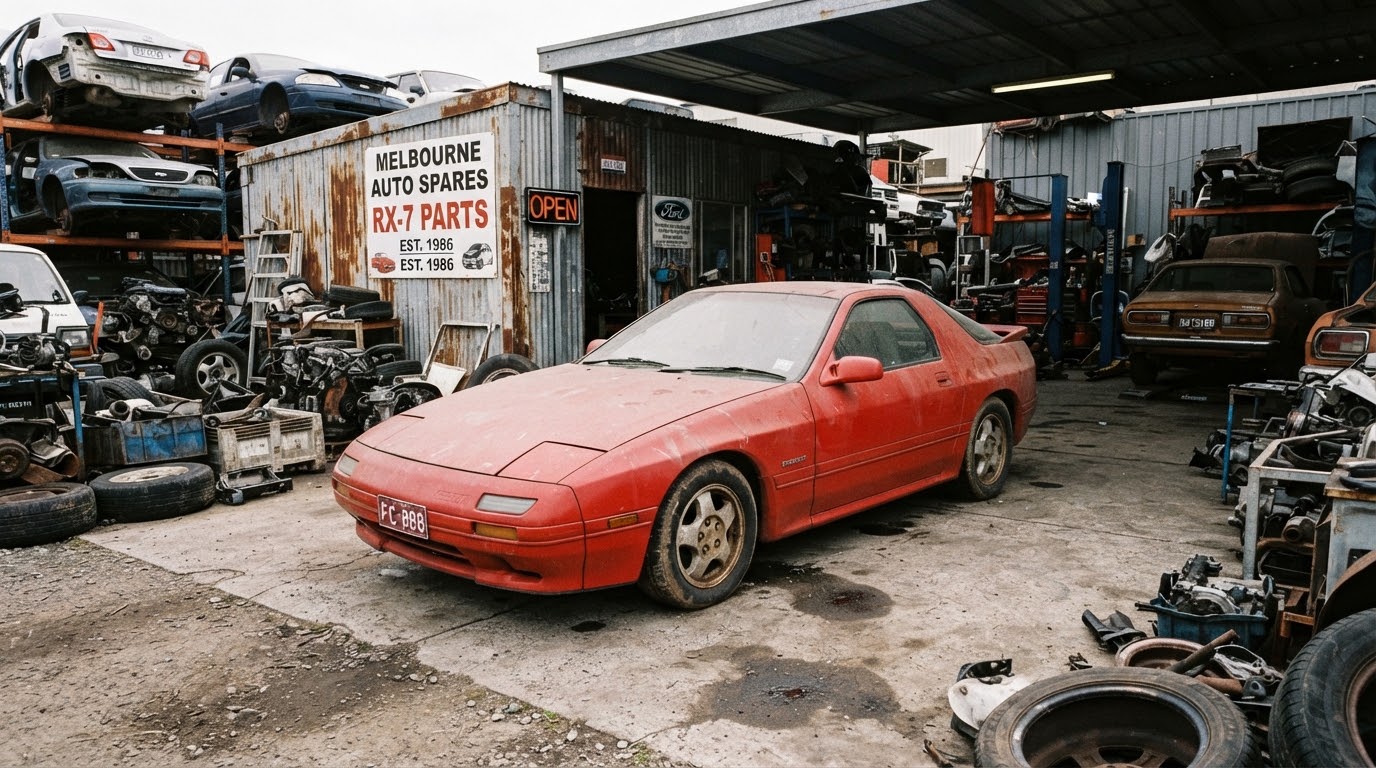
I have ordered parts from interstate and been frustrated by delays and damaged packaging. A good seller will pack an exhaust manifold or a turbocharger properly, with bubble wrap and a sturdy box. Ask about that before you pay. It is a small detail that makes a big difference.
Final Thoughts
Keeping a rotary-powered Mazda on the road is not always easy, but it is rewarding. The engine is unique, the community is knowledgeable, and the cars themselves have a character that no other vehicle can match. Whether you are chasing apex seals for a 12A, a Renesis intake manifold, or a complete 13B core, the parts are out there. The trick is knowing where to look and what to check before you buy. Used Mazda rotary engine parts from a reputable source can give your car another decade of life. Just take the time to inspect, ask questions, and understand what you are fitting. Your engine will thank you.